Contamination Reference
10 Common Mushroom Contaminants
Visual identification, severity ratings, and treatment options for the contaminants you'll actually encounter — from Trichoderma green mold to wet bubble. Click any card for the full identification guide.
 Critical
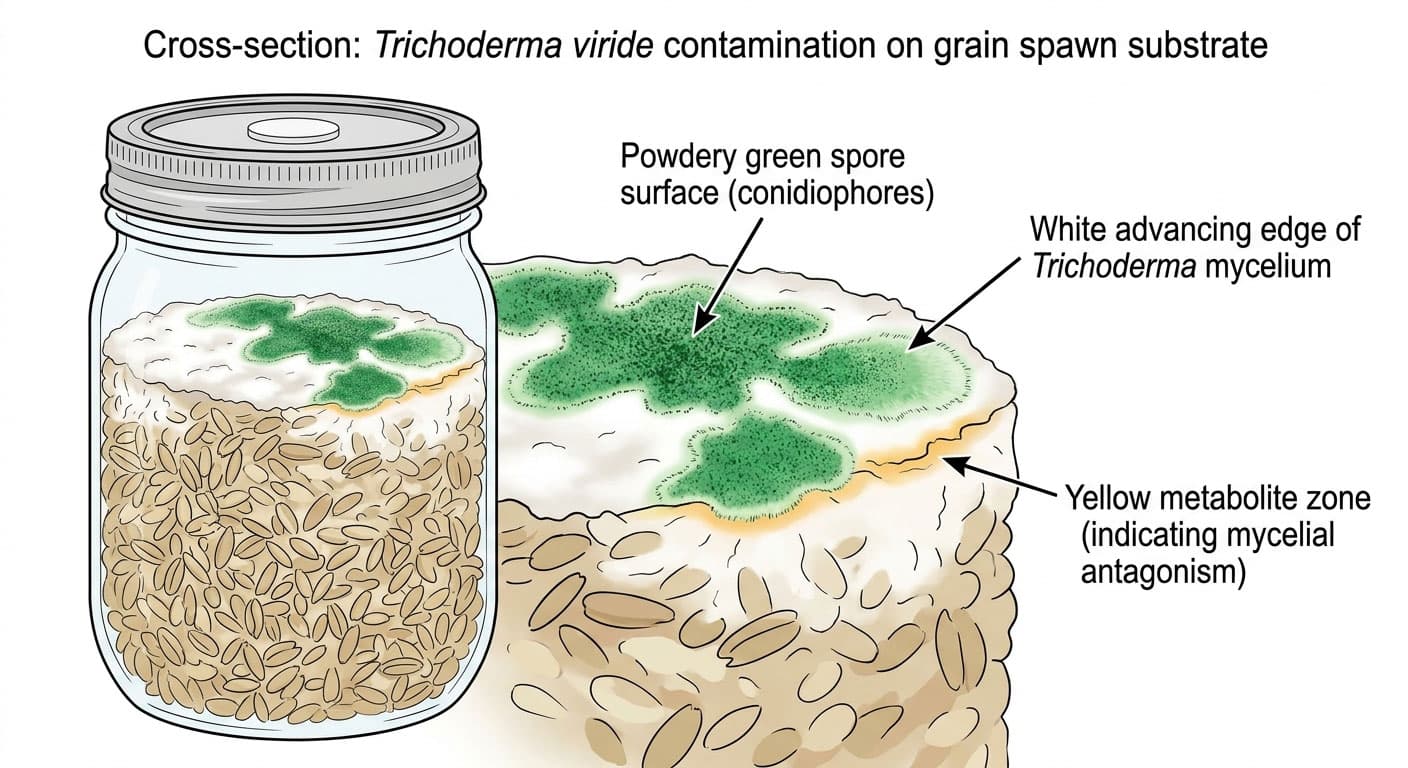
Trichoderma (Green Mold)
Trichoderma spp.
The #1 enemy of mushroom cultivators. Starts as aggressive white mycelium that can be confused with target mycelium, then sporulates into vivid green.
Identification guide
 Moderate
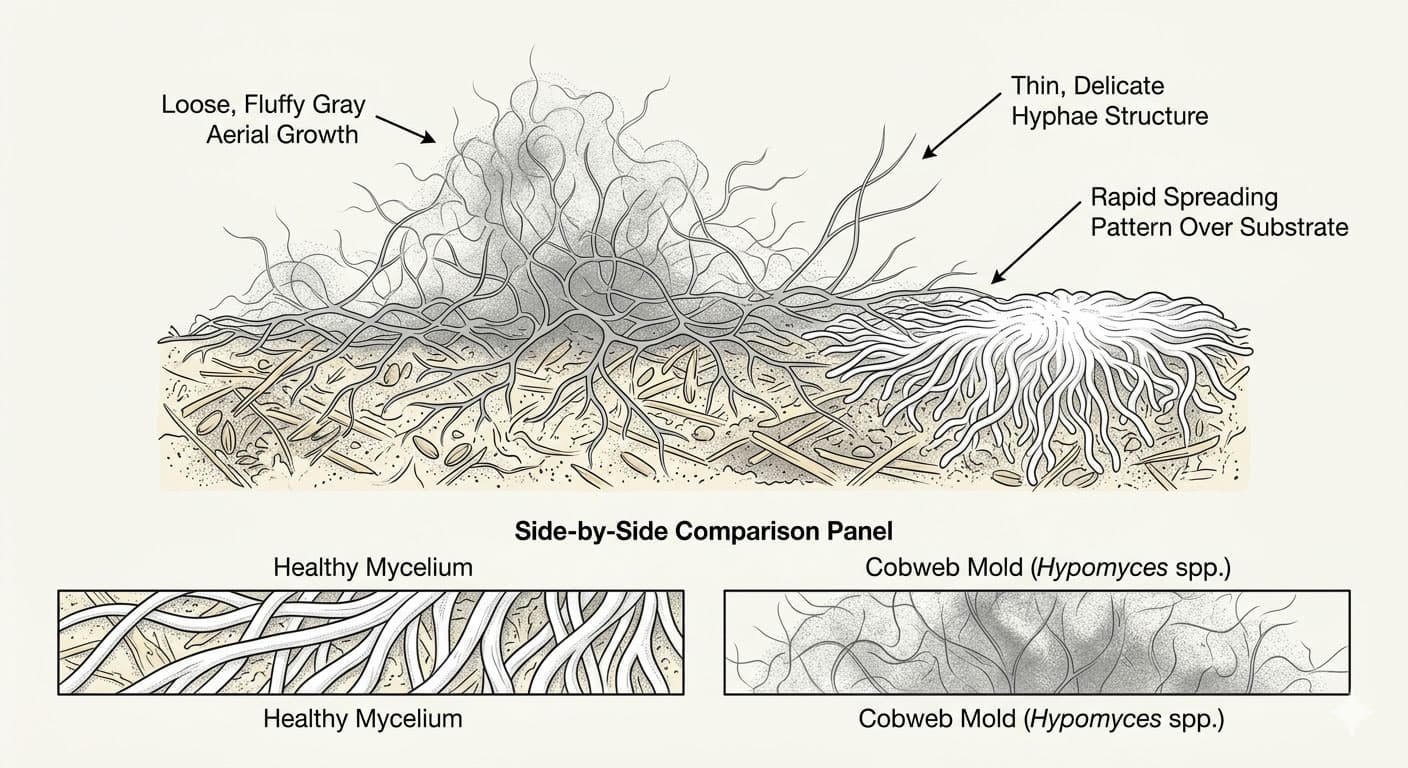
Cobweb Mold
Hypomyces/Cladobotryum spp.
Appears as grey, wispy strands hovering above the substrate. Its defining characteristic is speed — a dime-sized patch can cover an entire tub in 24–48 hours.
Identification guide
 High
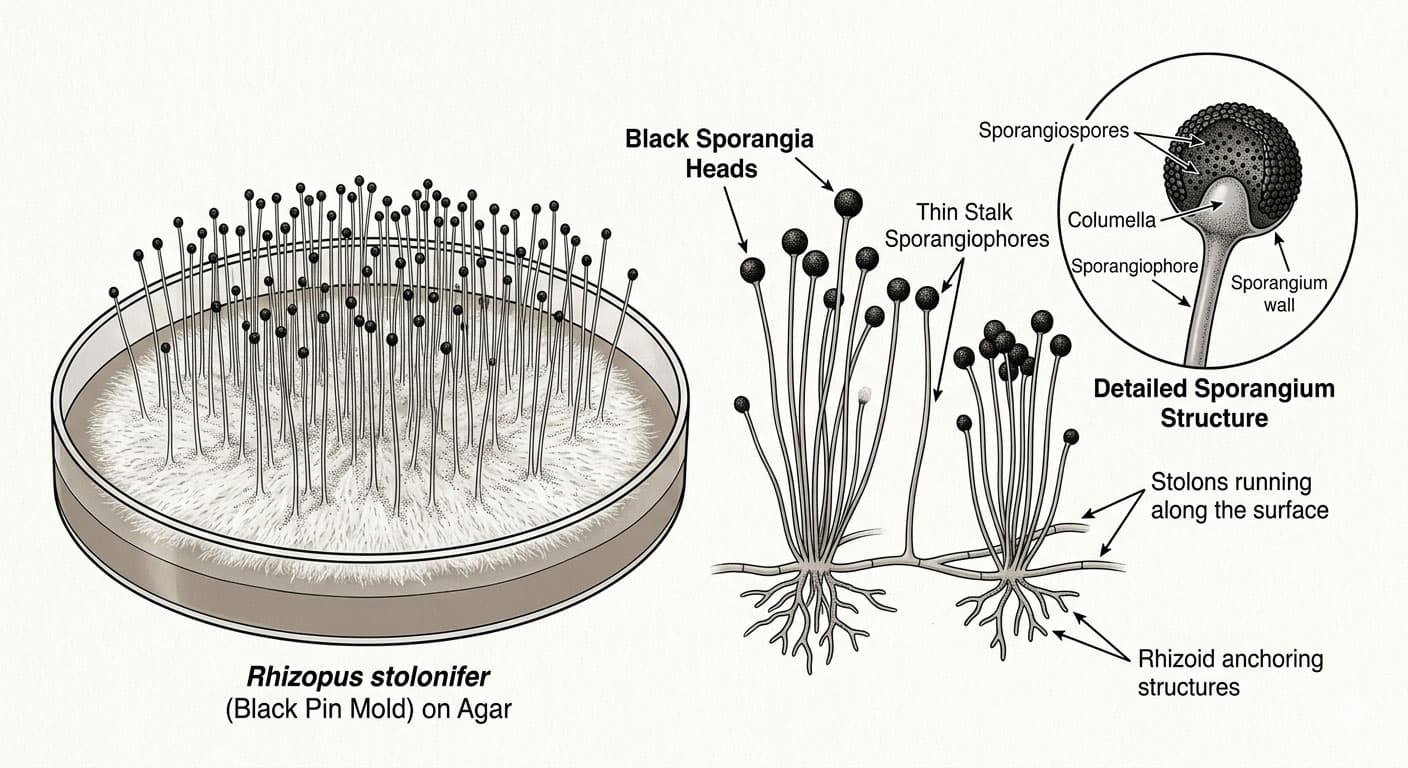
HighBlack Pin Mold
Rhizopus/Mucor spp.
Starts white, becomes grey, then develops characteristic black-headed pins on tall aerial stalks (sporangia). Very fast growing. Common grain and straw contaminant.
Identification guide
 High
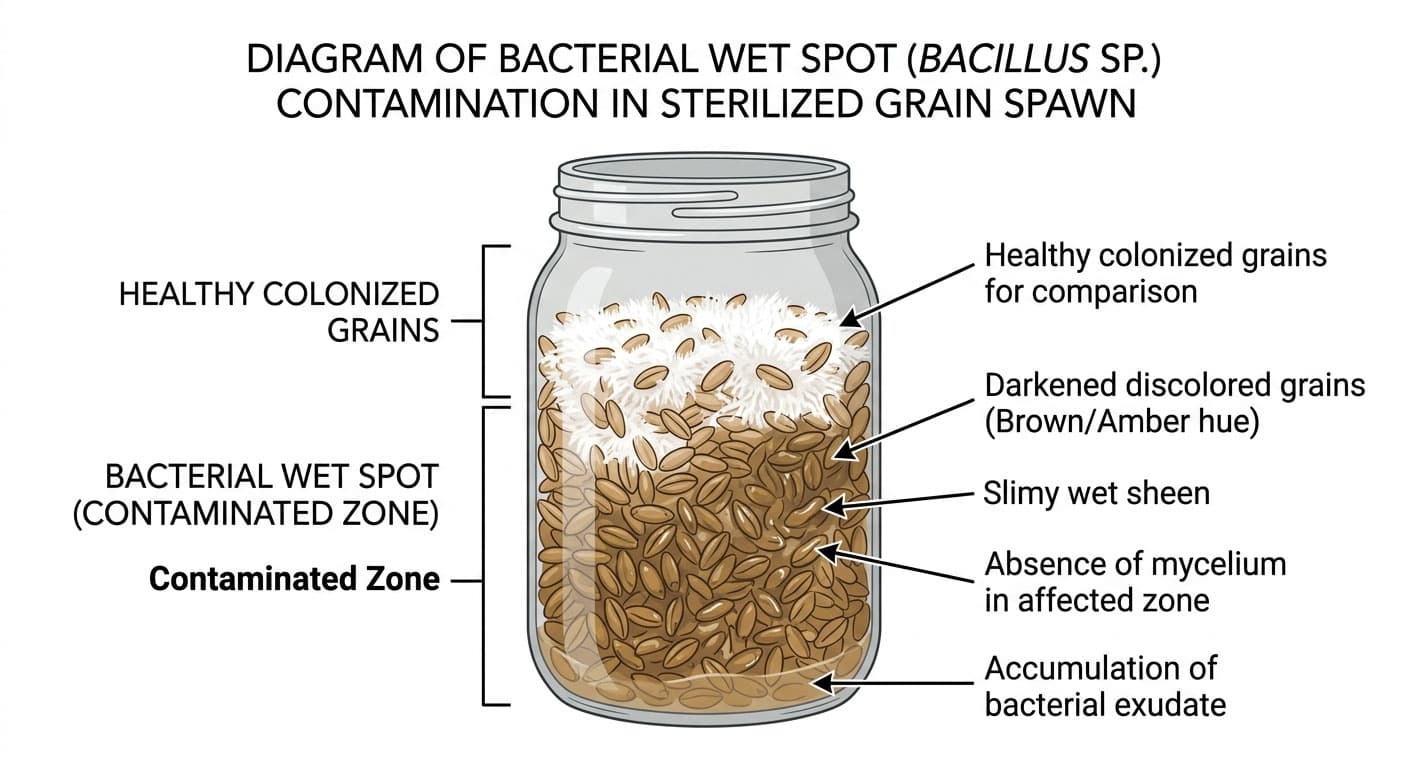
HighBacterial Contamination (Wet Spot/Bacillus)
Bacillus spp.
Manifests as dull gray to mucus-like slime on grain, with a strong sour smell. On fruiting mushrooms, Pseudomonas causes yellow-to-brown superficial lesions (bacterial blotch).
Identification guide
 High
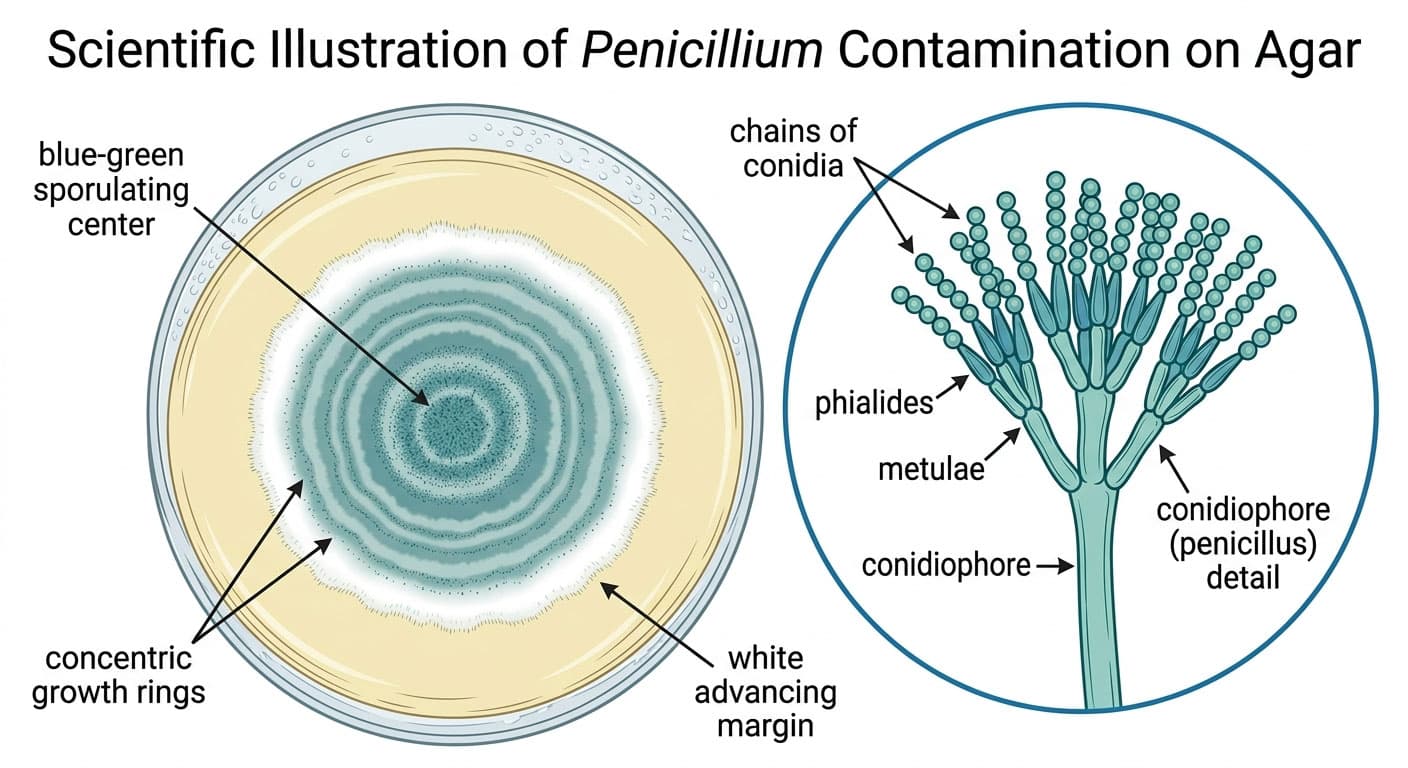
HighPenicillium
Penicillium spp.
Shows as blue-green velvety colonies with white margins, often indistinguishable from Trichoderma without microscopy. Common on under-sterilized grain.
Identification guide
 Critical
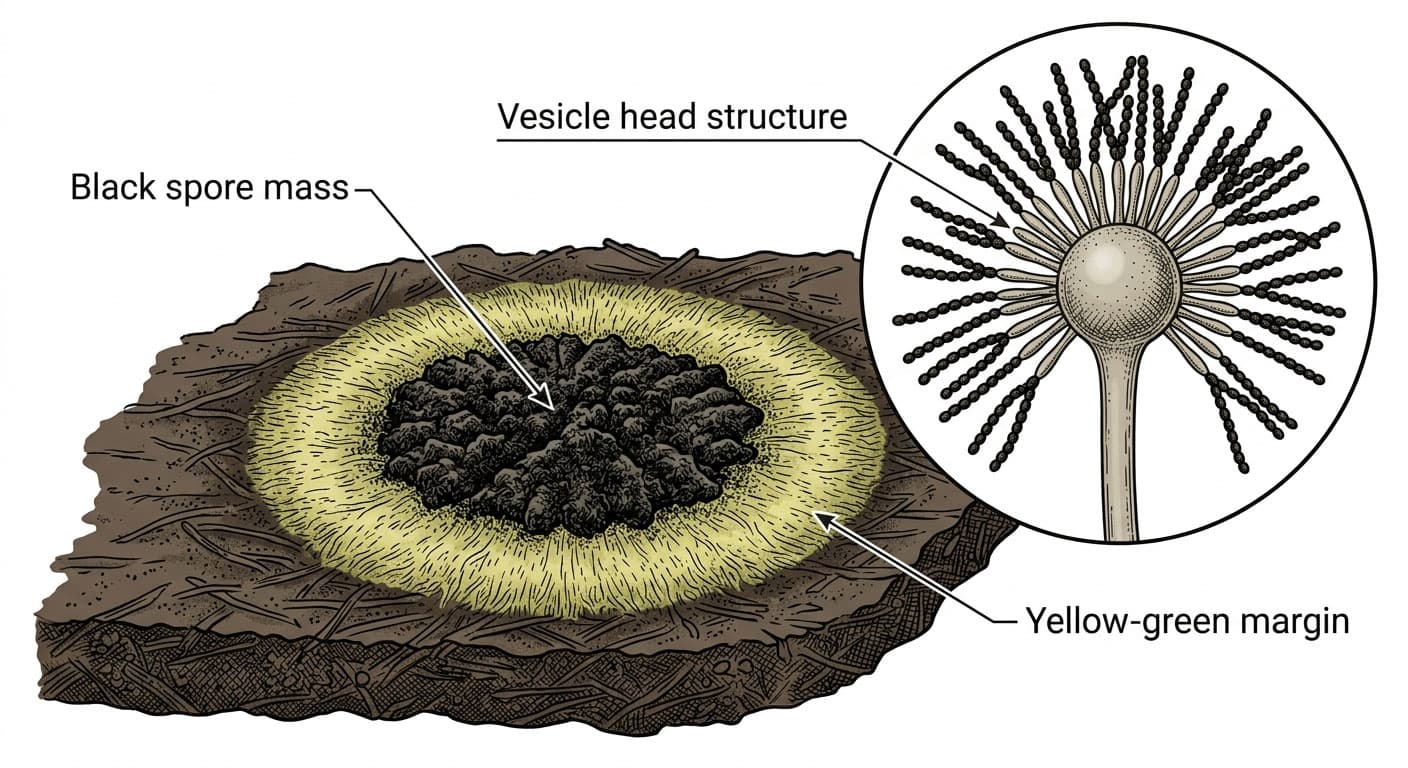
Aspergillus (Black Mold)
Aspergillus spp.
A serious health hazard. A. flavus produces aflatoxins (the most potent hepatocarcinogens known). Several species cause aspergillosis ("Mushroom Worker's Lung Disease"). Handle with respiratory protection.
Identification guide
 Critical
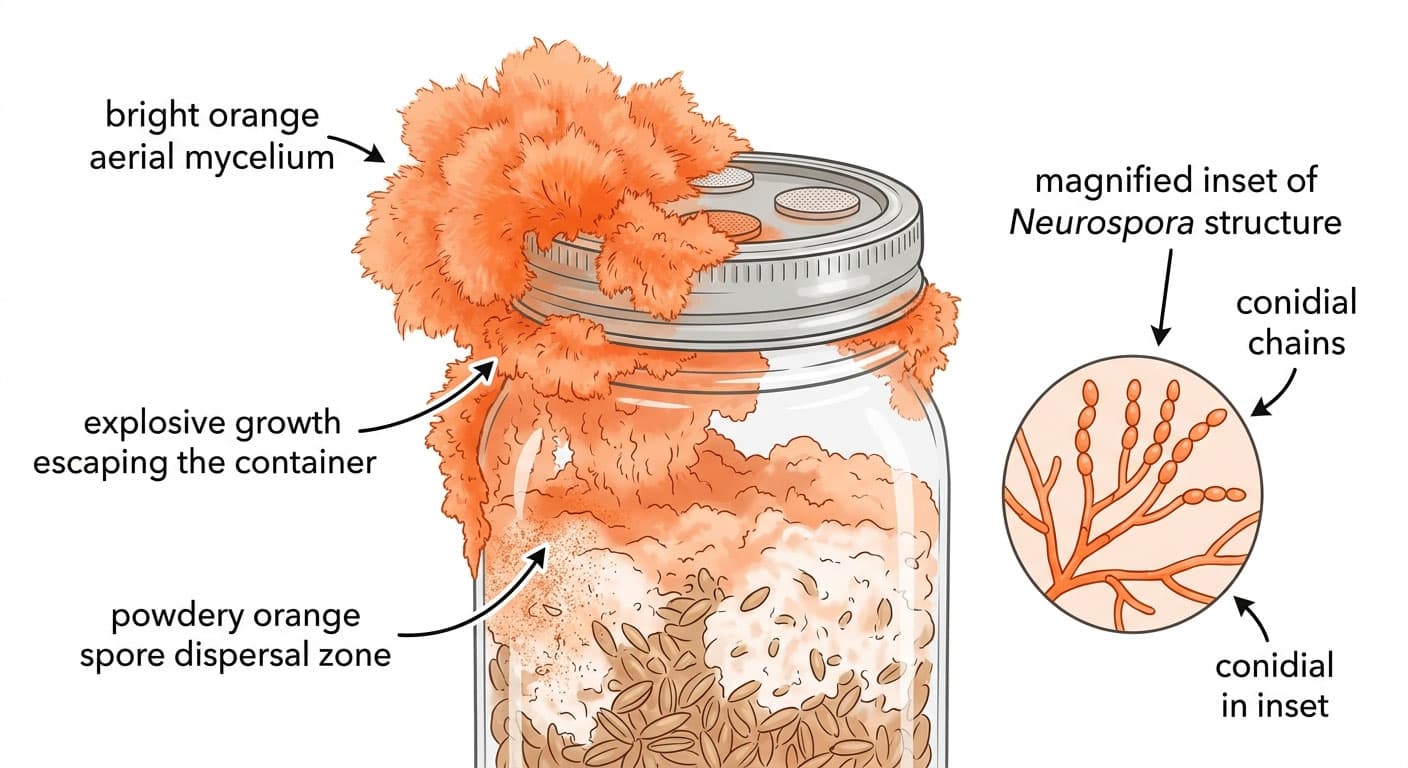
Neurospora (Orange Bread Mold)
Neurospora crassa
The most pernicious contaminant in mycology. Grows THROUGH cotton stoppers and filter discs. Can colonize a petri dish in 24 hours. A single sealed contaminated jar can spread spores to adjacent jars.
Identification guide
 High
HighVerticillium (Dry Bubble)
Lecanicillium fungicola
Causes distorted, stunted mushrooms with tilted caps, thickened stipes, and circular pale brown spots. Spreads via sticky spores on water splash, flies, pickers, and equipment.
Identification guide
 High
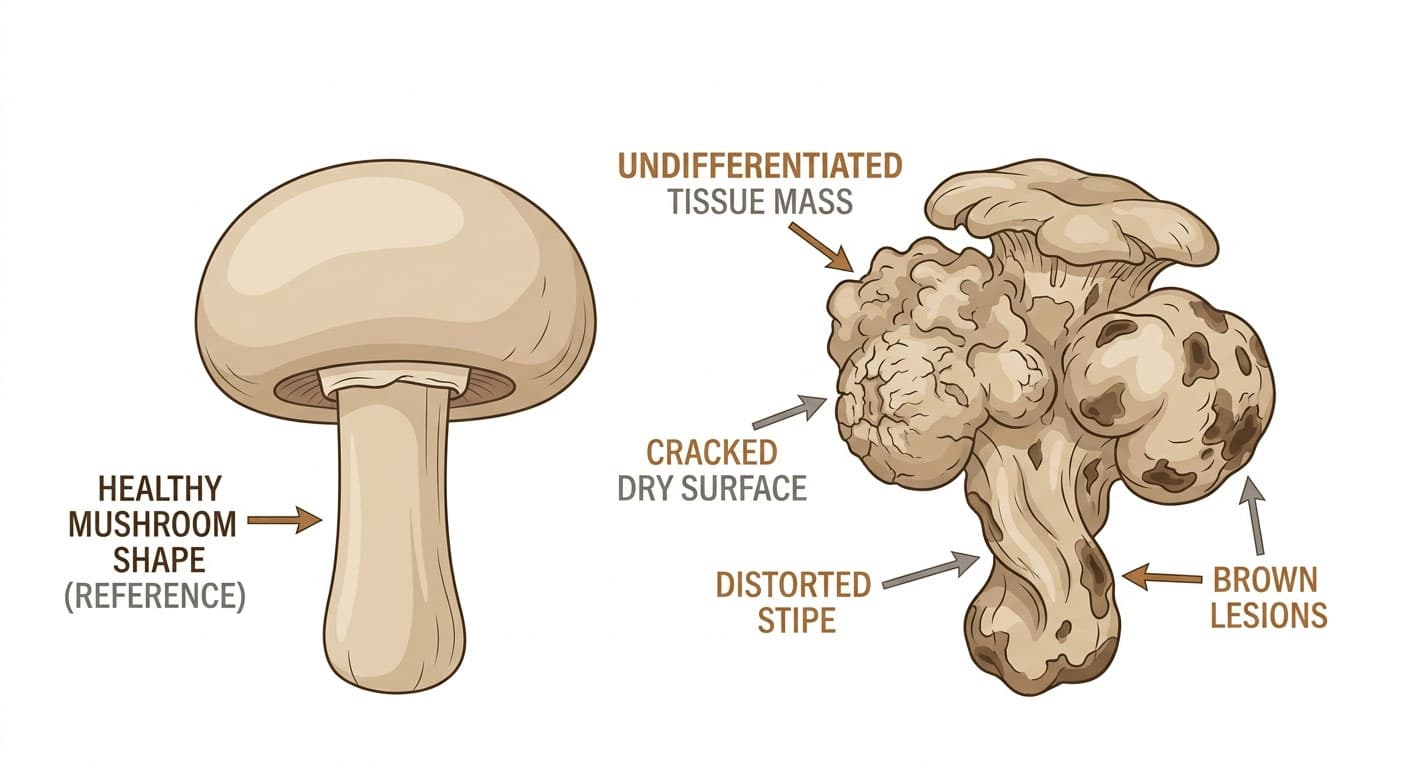
HighWet Bubble
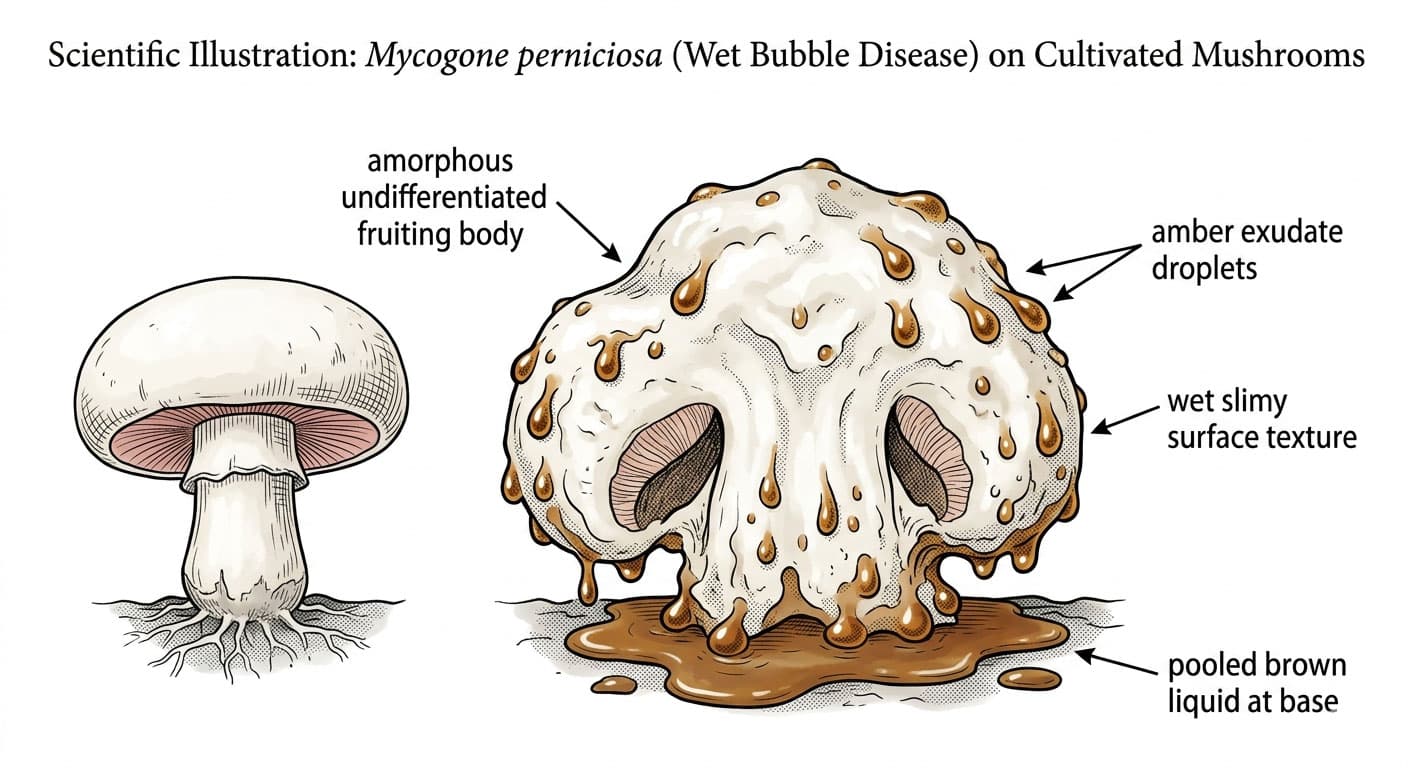
Mycogone perniciosa
Causes deformed, blob-like mushroom growth with amber/yellow liquid droplets. Undifferentiated tissue masses can grow as large as a grapefruit. The most important button mushroom disease in China.
Identification guide
 Moderate
Lipstick Mold
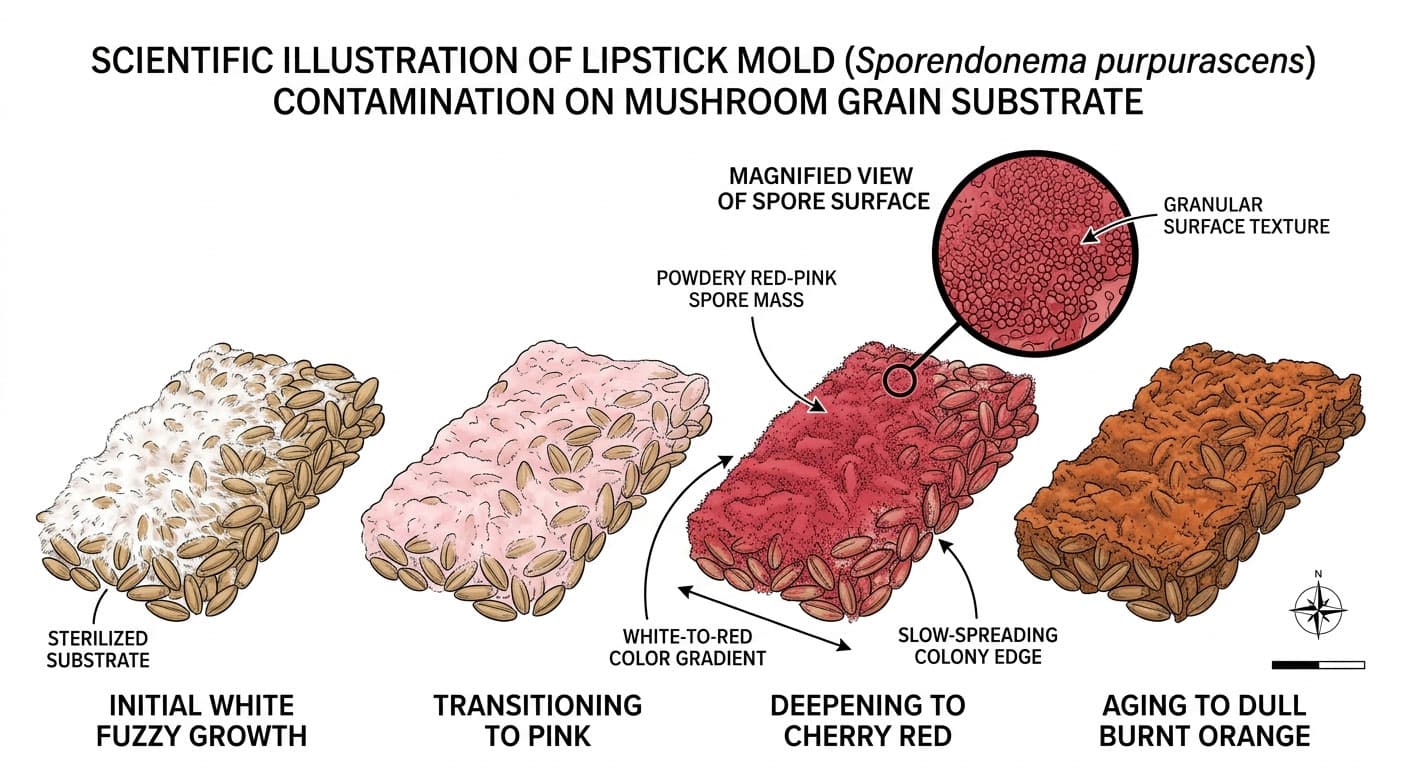
Sporendonema purpurescens
Progresses through white → pink → cherry red → dull orange as spores mature. Slow-growing and uncommon but persistent. Colonizes compost or casing.
Identification guide
Track contamination on your own grows
Sign up free to log a contamination directly on a grow timeline, see your contamination rate over time, and unlock the full identification + treatment steps for every contaminant.
Sign up free